Why do Chinese people give gifts in pairs - and never certain things?
Good things come in pairs — and some gifts are quietly taboo. A friendly guide to Chinese gift-giving etiquette, and the meaning behind the rules.
Chinese culture
Give a gift in China and there's a quiet grammar to it. Good things come in pairs. Red is lucky. And a few perfectly nice-seeming presents are quietly off-limits, for reasons that are more poetry than superstition. None of it is hard once you know the logic.
Why pairs?
Because in Chinese culture, good things are doubled. 好事成双 = "good things come in pairs." A single item can feel a little lonely, a little incomplete; a pair feels balanced, whole, a wish for togetherness. It shows up everywhere: paired decorations at weddings, gifts given two at a time, symmetry treated as its own kind of luck. Even numbers, especially, carry this sense of completeness - with one famous exception around the number four (more on that below).
Which gifts should you avoid, and why?
This is where it gets charming, because most of the taboos are puns. In Chinese, a lot of unlucky gifts are unlucky because they sound like something sad.
| Avoid giving | Why (it's usually a pun) |
|---|---|
| Clocks | "Giving a clock" (送钟) sounds like seeing someone off at a funeral (送终) |
| A pear to share | "Sharing a pear" (分梨) sounds like "to separate" (分离) |
| Shoes | Hints at someone walking away from you |
| Umbrellas | 伞 (umbrella) sounds like 散 (to part) |
| Anything in fours | 四 (four) sounds like 死 (death) |
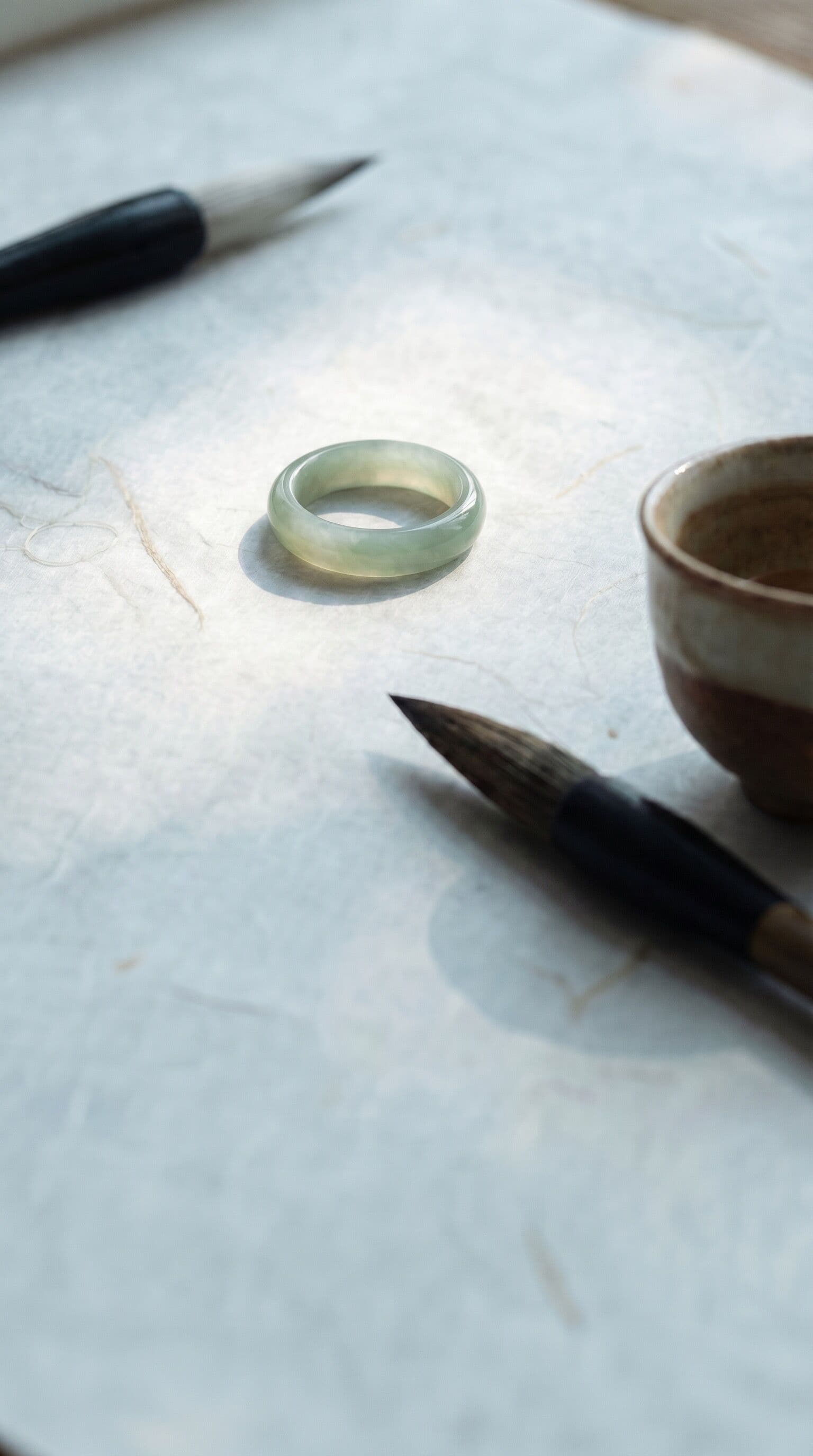
Give in pairs, lean on red and gold, and when in doubt choose something that ages well and carries meaning - tea, something for the home, jade. And it isn't all superstition: the deeper etiquette is simply about thoughtfulness, and about giving things that last.
The nicest rule of all
The gift Chinese families treasure most is often the one that wasn't bought on impulse: The piece of jade passed down, the thing chosen to be kept and handed on. "Given, not bought" is a real value here: the best gift is one meant to stay in the family, gaining meaning as it's worn or used.
That idea is close to our heart at by guimi: objects made to be kept and, one day, passed on. If you like that way of thinking about the things you give, our notes are where we write about it.
FAQ
Do I really have to give in pairs? It's a lovely touch, not a hard rule - but it's genuinely appreciated, especially at weddings and New Year.
Is red always the right colour? Red and gold are the safe, celebratory choices. Avoid wrapping in white or black, which are associated with mourning.
What's wrong with the number four? 四 (four) sounds like 死 (death), so fours are avoided in gifts and amounts the way some Western buildings skip the 13th floor.